Scoliosis Care in Vancouver
Conservative Chiropractic & Rehabilitation Support for Scoliosis

Scoliosis is a condition in which the spine develops a sideways curvature, often accompanied by rotation of the vertebrae.
It can affect children, teenagers, and adults, and the severity can range from very mild to more significant curves that require medical monitoring or specialist care.
At ProSpine Rehab & Wellness in Vancouver, we provide conservative musculoskeletal care for patients with scoliosis, with a focus on mobility, posture, strength, comfort, movement, and function.
Our care does not replace medical monitoring or specialist management, and we do not claim that chiropractic adjustments can permanently straighten a structural scoliosis curve.
What Is Scoliosis?
Scoliosis is more than simply “bad posture.”
It involves a three-dimensional change in the spine that may include:
Sideways curvature
Rotation of the vertebrae
Uneven shoulders
Uneven waist or hips
Rib prominence on one side
Differences in posture or balance
In some people, scoliosis is very mild and causes few or no symptoms.
In others, it may contribute to stiffness, muscle imbalance, fatigue, or discomfort.
Scoliosis in Children & Teenagers
Scoliosis is commonly identified during childhood or adolescence, particularly during periods of rapid growth.
Parents may notice:
One shoulder higher than the other
One shoulder blade more prominent
Uneven waistline
One hip appearing higher
The body leaning slightly to one side
Rib prominence when bending forward
Clothing hanging unevenly
If these changes are noticed, a proper assessment is important.
For growing children and teenagers, scoliosis should be monitored appropriately because some curves may progress during growth.
Does Every Scoliosis Curve Need Treatment?
No.
Management depends on factors such as:
Age • Curve size • Skeletal maturity • Symptoms • Rate of progression • Overall health
Some mild curves may only need observation and periodic monitoring.
More significant curves may require referral to a physician, specialist, or orthopedic team for further evaluation.
Depending on the case, management may include:
Observation • Exercise-based rehabilitation • Bracing • Specialist monitoring • Surgery in selected severe cases
Chiropractic care may be used as a supportive option for musculoskeletal symptoms, but it should not replace appropriate medical follow-up.
Scoliosis in Adults
Adults may have scoliosis that began during adolescence or develop spinal curvature later in life due to age-related changes.
Adult scoliosis may be associated with:
Back pain
Stiffness
Muscle fatigue
Reduced mobility
Uneven loading
Difficulty standing for long periods
Reduced exercise tolerance
Leg symptoms in some cases
Treatment is usually focused on symptom management, movement, strength, and function rather than trying to “correct” the curve itself.
Can Chiropractic Care Help Scoliosis?
Chiropractic care may help some patients manage musculoskeletal symptoms associated with scoliosis, such as stiffness, joint restriction, muscle tension, or movement discomfort.
Care may include:
Chiropractic Adjustments or Mobilization
When appropriate, gentle manual treatment may be used to improve movement in restricted spinal regions.
Soft-Tissue Treatment
Muscles around a curved spine may become tight or fatigued due to uneven loading.
Mobility Exercises
Exercises may focus on improving movement through the spine, hips, and shoulders.
Posture & Movement Education
We may help patients understand how to vary posture and move more comfortably during work, school, and daily activities.
Chiropractic care should be presented as supportive management, not as a guaranteed method of permanently straightening scoliosis.
Active Rehabilitation With Our Kinesiologist
Exercise is often an important part of conservative scoliosis care.
Our on-site kinesiologist may help with:
Core strength
Spinal mobility
Postural endurance
Hip and shoulder strength
Balance
Breathing mechanics
Movement control
Functional exercise
Sport-specific rehabilitation
For children and teenagers, exercises can be adapted to age, growth stage, and activity level.
For adults, rehabilitation may focus more on managing stiffness, improving strength, and maintaining function.
Posture & Scoliosis
Scoliosis and posture are related, but they are not the same thing.
A person with scoliosis may appear asymmetrical because of the underlying spinal curve.
This does not mean that simply “sitting straighter” will correct the scoliosis.
Instead, our approach focuses on helping patients improve:
Comfort • Mobility • Strength • Movement awareness • Functional posture
The goal is not to force the spine into an artificial position, but to help the body move and function as well as possible.
Scoliosis & Back Pain
Not everyone with scoliosis experiences pain.
When pain is present, it may be related to:
Muscle fatigue
Joint stiffness
Asymmetrical loading
Degenerative changes
Reduced mobility
Other coexisting spinal conditions
A physical assessment can help determine which factors appear most relevant to your symptoms.
Scoliosis & Sports
Many people with scoliosis can remain physically active.
Children and teenagers with scoliosis often participate in sports such as:
Swimming • Figure skating • Golf • Martial arts • Soccer • Dance • Gymnastics
Activity recommendations depend on the individual, the severity of the curve, symptoms, and any guidance from the patient’s physician or specialist.
Our goal is generally to help patients remain active rather than unnecessarily avoid movement.
Scoliosis & Growth Spurts
Growth spurts are especially important in adolescent scoliosis.
During rapid growth, certain curves may progress more quickly.
That is why children and teenagers with known scoliosis should be monitored appropriately.
If we identify changes that warrant medical evaluation, we may recommend follow-up with a family physician or specialist.
Do I Need an X-Ray?
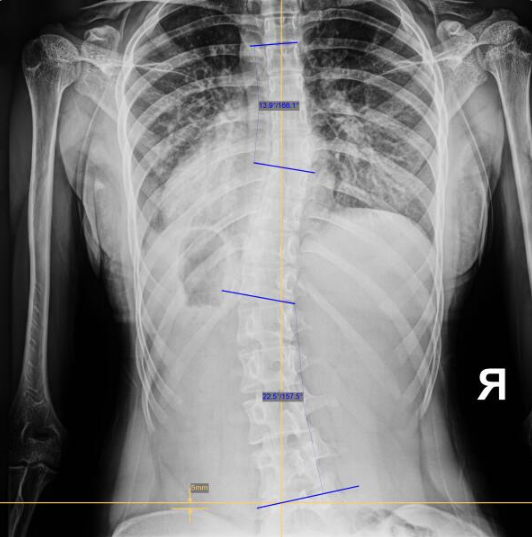
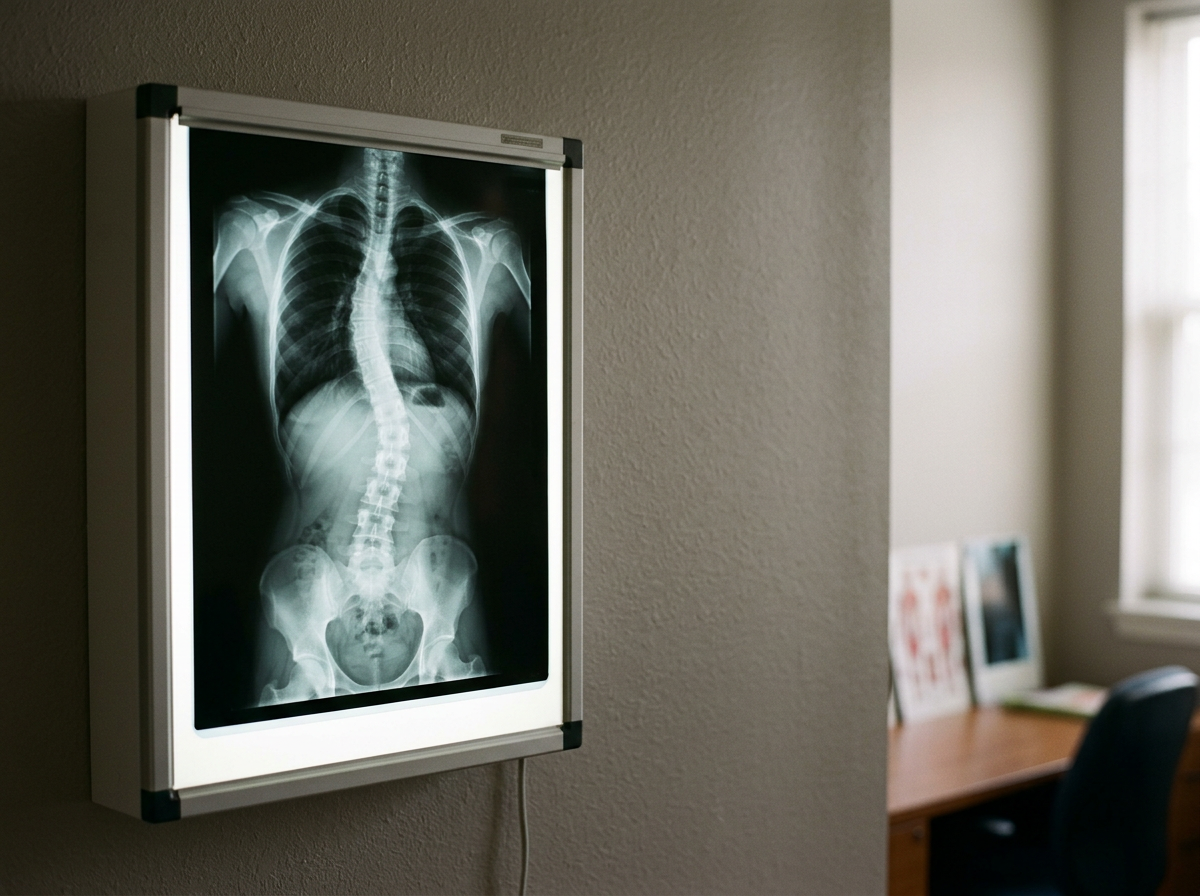
X-rays are commonly used to evaluate scoliosis because they allow the spinal curve to be measured.
At ProSpine Rehab & Wellness, we have access to in-house digital X-ray imaging when clinically appropriate.
Imaging may help assess:
Presence of scoliosis
Curve location
Curve magnitude
Spinal alignment
Structural changes
However, imaging should only be used when clinically indicated.
For children and teenagers, unnecessary repeat imaging should be avoided, and monitoring should follow appropriate clinical guidelines.
What Is a Cobb Angle?
The Cobb angle is the standard measurement used to describe the size of a scoliosis curve on an X-ray.
It helps healthcare providers classify the curve and monitor whether it is changing over time.
Treatment decisions should not be based on the Cobb angle alone.
Age, skeletal maturity, symptoms, and progression are also important.
Can Chiropractic Straighten Scoliosis?
This is an important question.
We do not claim that chiropractic adjustments can permanently straighten structural scoliosis.
Chiropractic and rehabilitation may help with associated issues such as:
Pain • Stiffness • Muscle tension • Mobility • Function
Structural scoliosis should be monitored appropriately, especially in growing children and teenagers.
If bracing or specialist care is indicated, chiropractic care should complement—not replace—that management.
When Should a Child Be Referred?
Further medical assessment may be appropriate when:
A spinal curve appears to be progressing
The child is still growing rapidly
There is significant asymmetry
Pain is persistent or severe
Neurological symptoms are present
The curve appears moderate or significant
There are concerns about skeletal development
If our examination identifies findings that warrant specialist input, we will recommend appropriate referral.
What to Expect at ProSpine
1. Consultation
We discuss the patient’s history, symptoms, growth, activity, and any previous imaging.
2. Posture & Movement Assessment
We may assess shoulder and pelvic symmetry, spinal movement, mobility, strength, and functional movement.
3. Imaging When Appropriate
If clinically indicated, digital X-ray may be considered.
4. Explanation of Findings
We explain what we see and whether further medical monitoring may be appropriate.
5. Individualized Care
Treatment may include chiropractic care, mobility work, soft-tissue treatment, and active rehabilitation.
6. Ongoing Monitoring
For growing patients, changes over time may need to be monitored in coordination with other healthcare providers.
Supporting Movement, Strength & Confidence
Scoliosis does not necessarily mean a person must stop being active or live with constant discomfort.
At ProSpine Rehab & Wellness, our goal is to help patients with scoliosis improve movement, strength, comfort, and function while ensuring that appropriate medical monitoring is respected.
ProSpine Rehab & Wellness
Vancouver, BC
778-805-8188
info@prospinevan.ca
BOOK A SCOLIOSIS ASSESSMENT