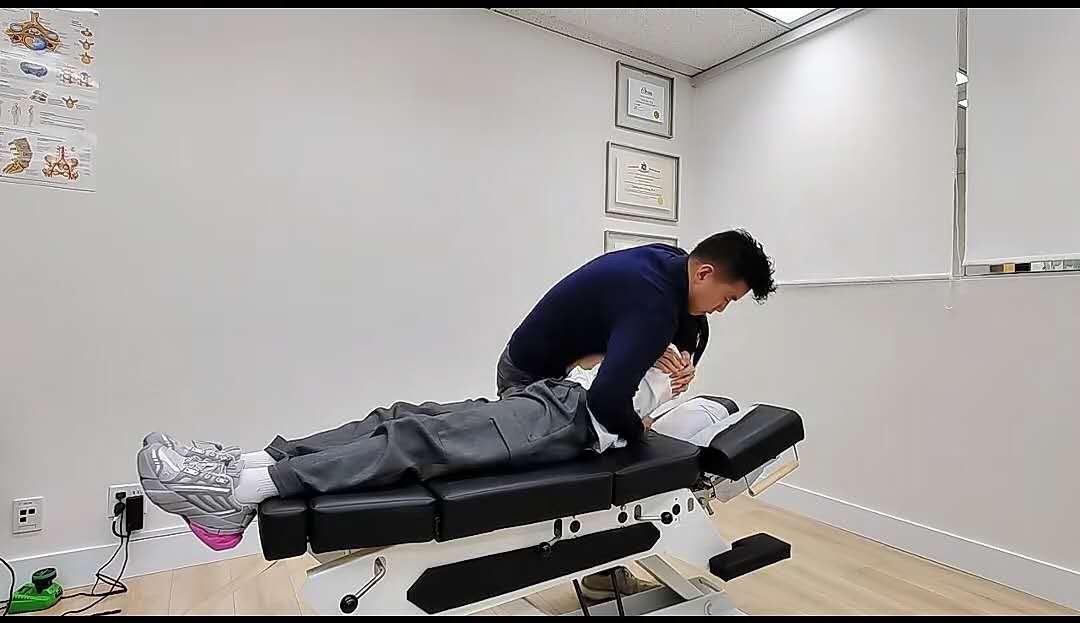
Mid-Back Pain Relief in Vancouver
Relief for Thoracic Spine Pain, Stiffness & Postural Strain

Mid-back pain can make sitting, working, exercising, breathing deeply, or even turning your body uncomfortable.
At ProSpine Rehab & Wellness in Vancouver, we assess the possible causes of thoracic spine discomfort and create an individualized treatment plan based on your symptoms, movement, posture, activity level, and goals.
Care may include chiropractic treatment, joint mobilization, soft-tissue techniques, mobility exercises, postural education, and active rehabilitation when appropriate.
BOOK A MID-BACK PAIN ASSESSMENT
What Is Mid-Back Pain?
The mid-back is known as the thoracic spine.
It is the region between the neck and lower back and includes the spinal joints, muscles, ribs, and surrounding soft tissues.
Unlike the neck and lower back, the thoracic spine is connected to the rib cage, so pain in this area can sometimes feel different from other types of spinal discomfort.
Symptoms may be felt:
Between the shoulder blades
Along one side of the spine
Around the ribs
Across the upper or middle back
During twisting or reaching
After prolonged sitting
With deep breathing or certain movements
Common Causes of Mid-Back Pain
Mid-back pain can have many causes.
Some common musculoskeletal contributors include:
Postural Strain
Long periods of sitting, studying, driving, or computer work can contribute to stiffness and muscle fatigue through the mid-back and shoulders.
Thoracic Joint Stiffness
Reduced movement through the thoracic spine may make rotation, extension, or prolonged sitting uncomfortable.
Muscle Tension
Muscles around the shoulder blades, spine, and rib cage may become tight from repetitive activity or sustained posture.
Rib Joint Irritation
The ribs connect to the thoracic spine through small joints.
These areas can sometimes become irritated or stiff, producing localized pain around the mid-back or rib region.
Sports & Exercise
Golf, weight training, swimming, racquet sports, martial arts, and rotational activities can place repeated demands on the thoracic spine.
Repetitive Work
Jobs involving prolonged sitting, lifting, reaching, or repeated upper-body movement can contribute to discomfort.
Previous Injury
Falls, motor vehicle accidents, sports injuries, or sudden twisting movements may affect the thoracic spine and surrounding tissues.
Pain Between the Shoulder Blades
Pain between the shoulder blades is one of the most common complaints we see involving the mid-back.
Patients may describe:
A dull ache • Tightness • Burning • Sharp pain with movement • A knot-like sensation
This area can become irritated by prolonged computer use, rounded sitting posture, repetitive upper-body activity, or reduced thoracic mobility.
Treatment depends on the cause and may include mobility work, joint treatment, soft-tissue therapy, and strengthening.
Mid-Back Pain From Sitting & Desk Work
The thoracic spine is particularly affected by prolonged sitting.
Many patients spend hours each day working on laptops, looking down at phones, driving, or sitting in meetings.
Over time, this can contribute to:
Rounded upper-back posture
Shoulder tension
Reduced thoracic rotation
Stiffness after sitting
Discomfort between the shoulder blades
The solution is not necessarily to maintain a rigid “perfect posture.”
Instead, we often focus on movement variety, mobility, strength, workstation setup, and regular position changes.
Mid-Back Pain & Posture
Posture can influence how the muscles and joints of the mid-back are loaded.
Common patterns may include:
Rounded shoulders
Forward head posture
Increased upper-back rounding
Slouched sitting
Reduced thoracic extension
Limited spinal rotation
Posture is only one part of the picture.
At ProSpine, we look at posture together with mobility, strength, activity, and symptoms rather than assuming posture alone is the cause of pain.
Mid-Back Pain & Rib Discomfort
Because the ribs attach to the thoracic spine, some patients experience pain that seems to wrap around the side of the body.
Musculoskeletal rib or thoracic joint irritation may become noticeable with:
Twisting • Reaching • Deep breathing • Coughing • Certain sleeping positions
However, chest or rib-region pain can also have causes unrelated to the spine.
If your symptoms suggest a medical problem rather than a musculoskeletal condition, we will recommend appropriate medical evaluation.
How We Assess Mid-Back Pain
Your first visit begins with a detailed discussion about your symptoms.
We may ask about:
When the pain started • Work posture • Exercise • Previous injuries • Breathing-related pain • Sleep • Repetitive activities
Your chiropractor may then assess:
Thoracic range of motion
Rib and spinal joint mobility
Shoulder movement
Neck movement
Posture
Muscle function
Orthopedic findings
Relevant neurological function
The goal is to identify which factors appear most relevant to your symptoms.
How Chiropractic Care May Help
Chiropractic care may be one option for selected patients with musculoskeletal mid-back pain.
Treatment may include:
Thoracic Adjustments
When appropriate, a controlled chiropractic adjustment may be used to improve movement in restricted thoracic joints.
Joint Mobilization
Some patients may prefer or respond better to gentler mobilization techniques.
Rib Mobilization
When clinically appropriate, treatment may also address restricted or irritated rib joints.
Soft-Tissue Treatment
Muscles around the upper and mid-back may become tense, guarded, or fatigued.
Mobility Exercises
Exercises may target thoracic rotation, extension, shoulder movement, or rib mobility.
Strengthening
Improving upper-back and shoulder endurance may help patients tolerate sitting, work, and exercise more comfortably.
Thoracic Mobility Matters
The thoracic spine plays an important role in many everyday and athletic movements.
It contributes to:
Rotation • Reaching • Overhead movement • Golf swings • Throwing • Breathing mechanics
When the mid-back becomes stiff, other areas such as the neck, shoulders, or lower back may sometimes compensate.
Improving thoracic movement can therefore be an important part of rehabilitation for selected patients.
Mid-Back Pain in Golfers & Athletes
Sports involving rotation place significant demands on the thoracic spine.
Golfers, tennis players, swimmers, martial artists, and strength-training athletes may experience mid-back stiffness or discomfort when thoracic rotation or extension is limited.
A sports-focused assessment may look at:
Spinal rotation • Shoulder mobility • Hip movement • Core control • Sport-specific movement
Our goal is to help you return to activity with better movement and fewer limitations.
Active Rehabilitation With Our Kinesiologist
For patients who need more than passive treatment, our on-site kinesiologist can help with active rehabilitation.
Exercise may focus on:
Thoracic mobility
Shoulder-blade control
Postural endurance
Core strength
Rotational control
Upper-body strength
Return to sport or work
This allows chiropractic care and rehabilitation to work together within the same clinic.
Do I Need an X-Ray?
Not every patient with mid-back pain needs imaging.
At ProSpine Rehab & Wellness, we have access to in-house digital X-ray imaging when clinically indicated.
Imaging may be considered depending on factors such as trauma, persistent symptoms, clinical findings, or concern about structural changes.
Your chiropractor will discuss whether imaging is appropriate before any X-rays are taken.
When Mid-Back Pain Needs Medical Attention
Most mid-back pain is musculoskeletal, but certain symptoms require prompt medical assessment.
Seek medical care if mid-back pain is accompanied by symptoms such as:
Chest pain or pressure
Significant shortness of breath
Fever
Severe unexplained pain
Major trauma
Progressive weakness or numbness
Unexplained weight loss
Persistent night pain
Abdominal symptoms with severe back pain
If your symptoms do not appear appropriate for chiropractic care, we will recommend further medical evaluation.
What to Expect at ProSpine
1. Consultation
We discuss your symptoms, lifestyle, work, and activity level.
2. Movement Assessment
We evaluate the thoracic spine, ribs, shoulders, neck, and relevant movement patterns.
3. Explanation
We explain what may be contributing to your symptoms.
4. Personalized Treatment
Care may include chiropractic treatment, mobilization, soft-tissue work, mobility exercises, and rehabilitation.
5. Reassessment
Your plan is adjusted according to your response and progress.
Move, Sit & Exercise More Comfortably
Mid-back pain does not have to become something you simply tolerate.
If stiffness, pain between the shoulder blades, rib discomfort, or postural strain is affecting your daily life, we can assess the problem and determine an appropriate treatment plan.
ProSpine Rehab & Wellness
Vancouver, BC
778-805-8188
info@prospinevan.ca
BOOK A MID-BACK PAIN ASSESSMENT