Sacroiliac Joint Dysfunction Treatment in Vancouver
Relief for SI Joint Pain, Pelvic Discomfort & Low Back Pain

Pain around one side of the lower back, buttock, or pelvis may sometimes be related to the sacroiliac joint, commonly called the SI joint.
At ProSpine Rehab & Wellness in Vancouver, we assess the lower back, pelvis, hips, and surrounding muscles to help determine whether the SI joint may be contributing to your symptoms.
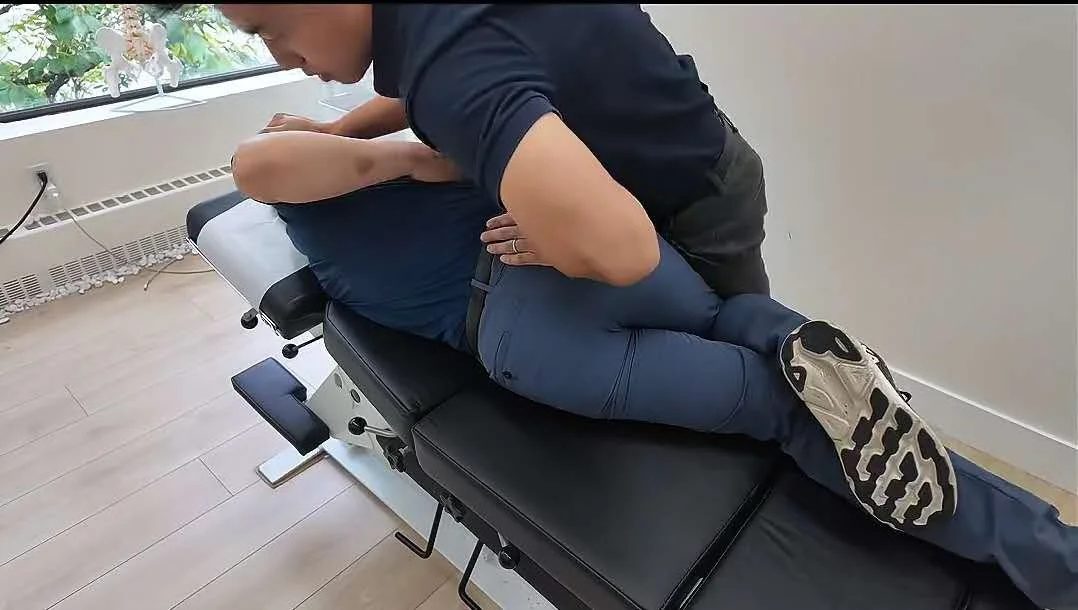
When appropriate, treatment may include chiropractic care, joint mobilization, soft-tissue techniques, mobility work, and active rehabilitation with our on-site kinesiologist.
What Is the Sacroiliac Joint?
You have two sacroiliac joints, one on each side of the pelvis.
They connect the sacrum, the triangular bone at the bottom of the spine, to the ilium, one of the large bones of the pelvis.
The SI joints help transfer force between the spine and the legs during movements such as:
Walking • Running • Standing • Climbing stairs • Lifting • Sports
These joints normally move only a small amount. When the surrounding joint structures or tissues become irritated, discomfort may develop around the lower back, pelvis, or buttock.
What Does SI Joint Pain Feel Like?
Sacroiliac joint discomfort is commonly felt around one side of the lower back or upper buttock.
Symptoms may include:
Pain near the “dimples” of the lower back
One-sided buttock pain
Pelvic discomfort
Pain when standing from a chair
Discomfort climbing stairs
Pain while walking
Symptoms after prolonged standing
Pain when rolling over in bed
Discomfort when standing on one leg
Pain during certain sports or exercises
Some people may also feel discomfort into the hip, groin, or upper thigh.
What Causes Sacroiliac Joint Dysfunction?
SI joint pain can develop for several reasons.
Repetitive Loading
Running, lifting, jumping, martial arts, golf, and other repetitive activities can place repeated stress across the pelvis.
Falls or Trauma
A fall onto one side of the pelvis or a motor vehicle accident can sometimes irritate the SI joint region.
Pregnancy
Pregnancy changes body weight distribution and places additional demands on the pelvis and lower back.
Hormonal changes may also increase joint mobility.
Some pregnant patients experience discomfort around the SI joints or pelvic region.
Prolonged or Uneven Positions
Repeatedly standing with more weight on one leg or prolonged asymmetrical postures may aggravate symptoms in some people.
Hip or Lower-Back Problems
The SI joint does not function independently from the hips and lumbar spine.
Restricted hip movement, lower-back pain, or altered movement patterns may contribute to increased stress around the pelvis.
SI Joint Pain vs. Low Back Pain
SI joint dysfunction can sometimes feel very similar to ordinary low-back pain.
The difference is that SI-related pain is often felt lower and more toward one side of the pelvis or buttock.
However, symptoms alone are not enough to make a diagnosis.
Your chiropractor may assess both the lumbar spine and SI joints, because several conditions can produce similar pain patterns.
SI Joint Pain vs. Sciatica
Pain in the buttock does not automatically mean sciatica.
SI Joint Pain
Often remains around the lower back, pelvis, buttock, or upper thigh.
Sciatica
More commonly involves symptoms travelling down the leg and may include:
Tingling • Numbness • Burning • Weakness
If you have symptoms travelling below the knee or neurological symptoms such as numbness or weakness, we may perform a more detailed neurological assessment.
[LEARN MORE ABOUT LUMBAR RADICULOPATHY]
How We Assess SI Joint Dysfunction
There is no single test that can identify every case of SI joint pain.
Your assessment may include a combination of:
History • Movement testing • Hip assessment • Lumbar spine assessment • SI joint provocation testing • Muscle function • Neurological testing
We may also look at:
How you walk
Hip mobility
Pelvic control
Single-leg balance
Lower-body strength
Activities that reproduce your symptoms
The goal is to determine whether the SI joint appears to be a likely contributor and whether other causes need to be considered.
How Chiropractic Care May Help
For selected patients with musculoskeletal SI joint pain, chiropractic care may be one component of conservative management.
Treatment may include:
SI Joint Mobilization
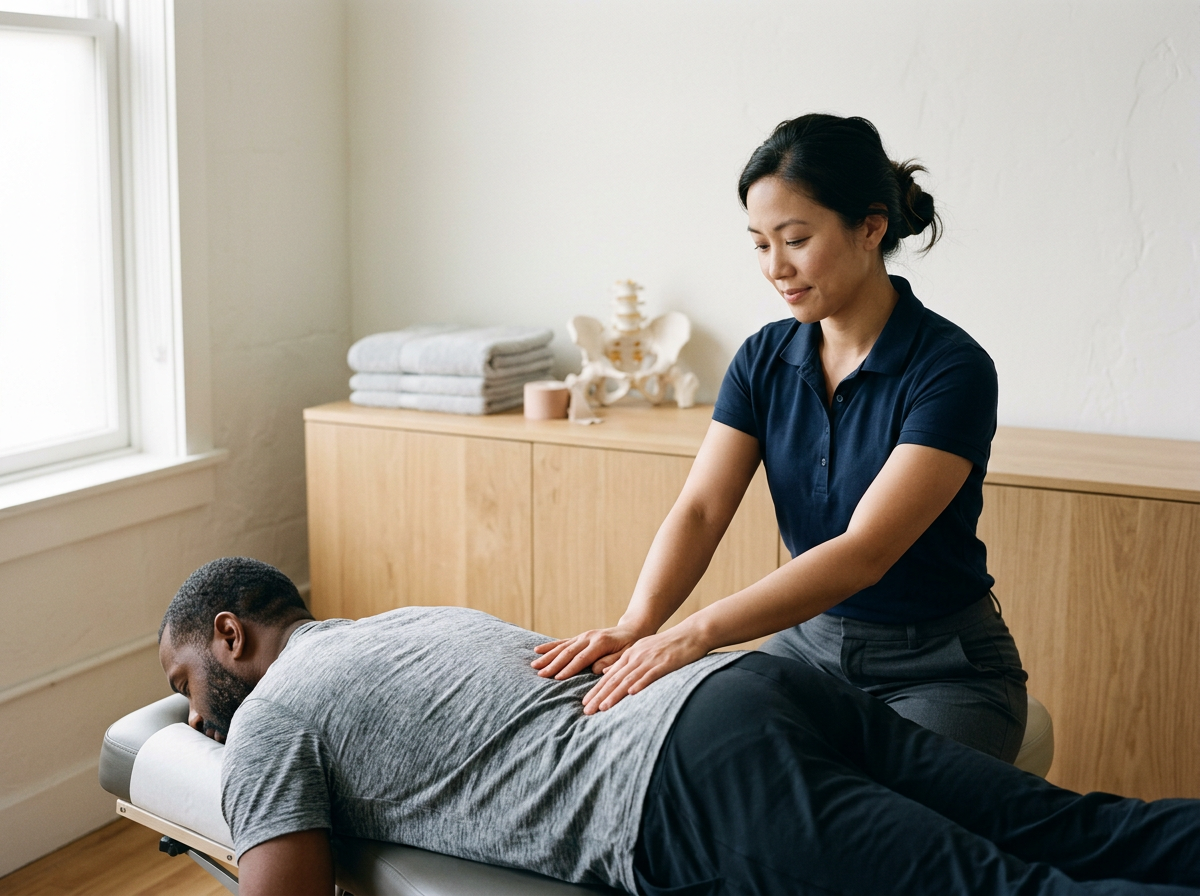
Gentle mobilization may be used to improve comfortable movement around the pelvis.
Chiropractic Adjustments
When appropriate, a controlled adjustment may be used to address joint restrictions in the pelvis or nearby lumbar spine.
Soft-Tissue Techniques
Muscles around the hips, glutes, lower back, and pelvis may become tight or sensitive.
Mobility Exercises
Specific exercises may be used to improve hip or spinal movement where appropriate.
Treatment is individualized according to your symptoms, comfort, and examination findings.
Active Rehabilitation With Our Kinesiologist
SI joint problems are often influenced by how the pelvis and surrounding muscles tolerate load.
Our on-site kinesiologist may help you work on:
Glute strength
Core control
Hip stability
Single-leg balance
Pelvic control
Walking mechanics
Squatting and lifting
Return to exercise
Sport-specific movements
This allows chiropractic treatment and active rehabilitation to work together.
Our goal is to progress from:
Reducing irritation → improving movement → building strength → returning to normal activity
SI Joint Pain During Pregnancy
Pregnancy can place increased mechanical demands on the pelvis.
Some pregnant patients experience pain around one or both SI joints, particularly during:
Walking • Stairs • Turning in bed • Standing on one leg • Getting in and out of a car
Prenatal care is modified according to the patient's stage of pregnancy, comfort level, and health history.
Treatment may include gentle mobilization, modified chiropractic techniques, soft-tissue work, positioning changes, and appropriate exercises.
[LEARN MORE ABOUT PRENATAL CHIROPRACTIC]
SI Joint Pain in Athletes
The SI joint region may become irritated in sports that involve:
Running • Rotation • Kicking • Jumping • Single-leg loading
Examples include:
Golf
Soccer
Taekwondo
Running
Figure skating
Tennis
Weight training
For athletes, treatment should not only focus on the painful area.
We may also assess hip mobility, strength, balance, core control, and sport-specific movement.
[LEARN MORE ABOUT SPORTS CHIROPRACTIC]
Do I Need an X-Ray?
Most SI joint pain does not automatically require imaging.
At ProSpine Rehab & Wellness, we have access to in-house digital X-ray imaging when clinically appropriate.
Imaging may be considered depending on:
Trauma • Persistent symptoms • Age • Clinical findings • Concern about another condition
If advanced imaging or medical assessment is required, we can discuss appropriate next steps.
When SI Joint Pain Needs Medical Attention
Pain around the pelvis or lower back can sometimes be caused by conditions unrelated to the SI joint.
Seek prompt medical attention if symptoms are accompanied by:
Significant trauma
Fever
Unexplained weight loss
Severe night pain
Progressive leg weakness
Loss of bowel or bladder control
Numbness around the groin or saddle region
Severe abdominal or pelvic symptoms
If your presentation does not appear appropriate for chiropractic care, we will recommend further medical evaluation.
What to Expect at ProSpine
1. Consultation
We discuss where your pain is located, how it started, and which activities make it better or worse.
2. Physical Assessment
We assess the lower back, SI joints, hips, muscles, and relevant neurological findings.
3. Explanation
We explain what appears to be contributing to your symptoms.
4. Personalized Treatment
Your care may include chiropractic treatment, joint mobilization, soft-tissue work, and mobility exercises.
5. Active Rehabilitation
When appropriate, our kinesiologist can help build strength and improve movement control.
6. Reassessment
Your treatment plan is adjusted according to your progress.
Get Back to Moving Comfortably
If one-sided low-back, buttock, or pelvic pain is interfering with walking, exercise, work, or everyday activities, an assessment can help determine whether the sacroiliac joint may be involved.
At ProSpine Rehab & Wellness, we combine chiropractic care and active rehabilitation to help patients improve movement and function.
ProSpine Rehab & Wellness
Vancouver, BC
778-805-8188
info@prospinevan.ca
BOOK AN SI JOINT ASSESSMENT