Disc Injury Care
Care for Disc Bulges, Herniated Discs & Disc-Related Back or Neck Pain
Spinal disc injuries can cause pain, stiffness, reduced movement, and in some cases symptoms that travel into an arm or leg.
At ProSpine Rehab & Wellness in Vancouver, we assess disc-related symptoms and develop an individualized treatment plan based on your history, neurological findings, movement, activity level, and goals.
Depending on your condition, care may include chiropractic treatment, spinal decompression, mobility work, and active rehabilitation with our on-site kinesiologist.
What Is a Spinal Disc?
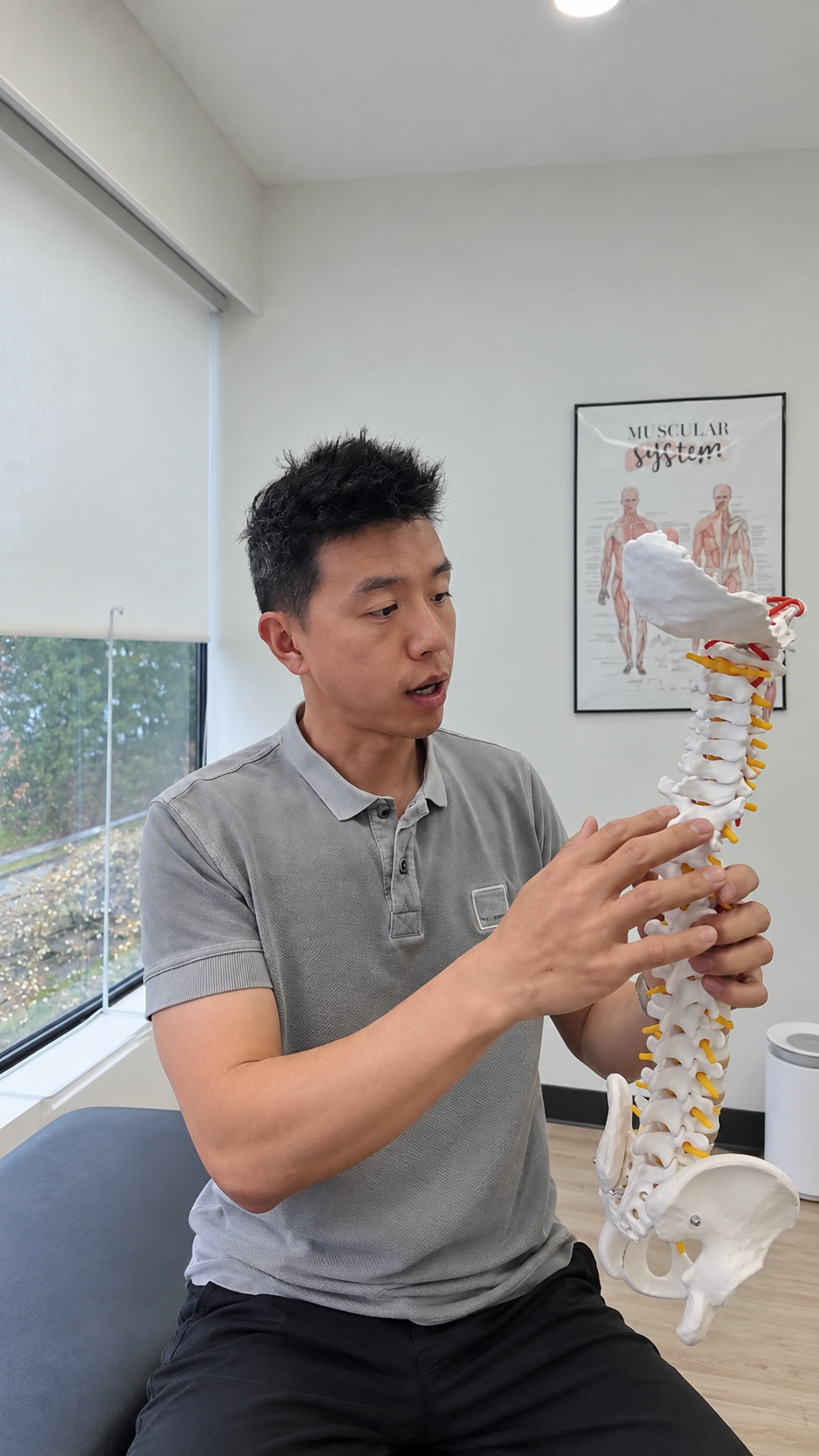
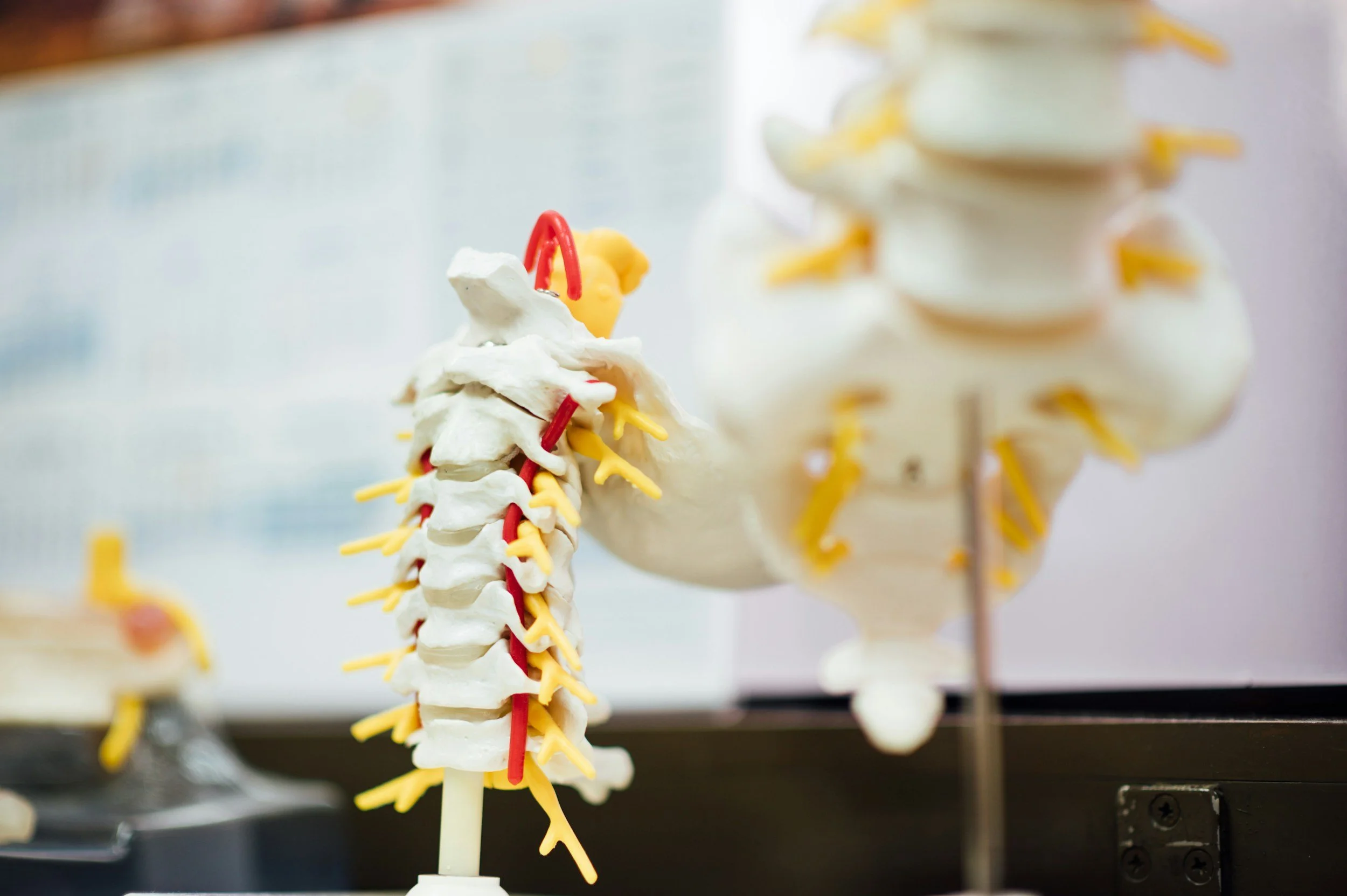
Between the bones of your spine are flexible structures called intervertebral discs.
These discs help:
Absorb load
Allow movement between spinal segments
Distribute forces through the spine
Maintain space between vertebrae
Each disc has a softer inner portion surrounded by a tougher outer layer.
Disc tissue can change with age, repetitive loading, injury, or degeneration.
What Is a Disc Injury?
“Disc injury” can refer to several different conditions.
Common terms include:
Disc Bulge
A disc bulge occurs when part of the disc extends beyond its usual boundary.
Many disc bulges cause no symptoms at all.
Disc Herniation
A herniation occurs when disc material pushes outward through weakened or damaged outer disc fibres.
If the herniation irritates a nearby nerve root, it may cause radiating pain, numbness, tingling, or weakness.
Disc Degeneration
Over time, spinal discs can lose hydration and height.
These changes are common with aging and do not always cause pain, but in some people they may contribute to stiffness or nerve irritation.
Annular Irritation
The outer portion of a disc can become irritated and may produce localized neck or back pain even without significant nerve involvement.
What Does Disc-Related Pain Feel Like?
Symptoms depend on the location and severity of the problem.
You may experience:
Localized low-back or neck pain
Stiffness
Pain with bending
Pain after prolonged sitting
Pain when lifting
Muscle guarding
Reduced range of motion
Buttock or shoulder discomfort
Pain travelling into an arm or leg
Tingling
Numbness
Weakness
Some people with disc injuries have almost no spinal pain but significant arm or leg symptoms.
Lumbar Disc Injuries
Disc problems in the lower back may cause:
Low-back pain • Buttock pain • Sciatica • Leg pain • Tingling • Numbness • Weakness
Symptoms may be aggravated by:
Sitting
Bending forward
Lifting
Coughing or sneezing
Repetitive loading
If a lumbar nerve root becomes irritated, symptoms may travel into the thigh, calf, foot, or toes.
[LEARN MORE ABOUT SCIATICA]
[LEARN MORE ABOUT LUMBAR RADICULOPATHY]
Cervical Disc Injuries
Disc problems in the neck may cause:
Neck pain • Shoulder pain • Arm pain • Tingling • Numbness • Weakness
Some patients notice symptoms extending into the hand or fingers.
A neurological examination can help determine whether a cervical nerve root may be involved.
[LEARN MORE ABOUT NECK PAIN]
What Causes Disc Injuries?
Disc-related problems can develop gradually or after a specific event.
Possible contributing factors may include:
Repetitive bending
Heavy lifting
Twisting
Prolonged sitting
Sports
Work-related loading
Motor vehicle accidents
Age-related changes
Previous spinal injuries
Sometimes symptoms begin without one obvious injury.
Does a Disc Bulge Always Mean Something Is Wrong?
No.
Disc bulges and degenerative changes are commonly seen on imaging, including in people without pain.
That means an MRI or X-ray finding should not automatically be assumed to be the source of symptoms.
At ProSpine, we consider imaging together with:
Your symptoms • Neurological findings • Physical examination • Movement patterns
Treatment should be based on the patient, not simply the scan.
How We Assess a Disc Injury
Your first appointment may include a detailed history and physical examination.
We may assess:
Range of motion • Strength • Reflexes • Sensation • Nerve tension • Joint movement • Hip or shoulder mobility • Functional movement
We also ask about:
Where the pain is located
Whether symptoms travel
Numbness or tingling
Weakness
What movements aggravate symptoms
Work and exercise demands
Previous injuries
Previous imaging
These findings help determine whether your symptoms appear consistent with a disc-related condition and whether conservative care is appropriate.
Do I Need an X-Ray or MRI?
Not every suspected disc injury requires imaging.
At ProSpine Rehab & Wellness, we have access to in-house digital X-ray imaging when clinically indicated.
X-rays can help evaluate certain bony and structural findings, but they do not directly show spinal discs or nerve roots.
An MRI may sometimes be more appropriate when detailed information about discs, nerves, or other soft tissues is needed.
Your history and neurological examination help guide whether imaging is necessary.
Chiropractic Care for Disc-Related Pain
For selected patients, chiropractic care may be included as part of conservative management.
Treatment may involve:
Gentle Mobilization
When symptoms are highly irritated, lower-force techniques may be used initially.
Chiropractic Adjustments
When appropriate, controlled adjustments may be used to improve joint movement in areas surrounding the affected spinal region.
Soft-Tissue Techniques
Muscles around an irritated spinal segment may become tight or guarded.
Mobility Exercises
Specific movements may be prescribed depending on your symptoms and response.
Treatment is individualized rather than based on one standard protocol.
Spinal Decompression for Disc Injuries
For selected patients, mechanical spinal decompression or traction may be considered as part of treatment.
At ProSpine, we use the Chattanooga Triton DTS® traction system with the Triton 6E table.
The system allows controlled traction to be adjusted according to:
Force • Position • Hold time • Rest time • Treatment duration • Patient tolerance
Spinal decompression may be considered for certain patients with:
Disc-related low-back pain
Disc-related neck pain
Sciatica
Lumbar radiculopathy
Cervical radiculopathy
Nerve-related symptoms
It is not appropriate for every disc injury, so treatment begins with an assessment.
[LEARN MORE ABOUT SPINAL DECOMPRESSION]
Can Spinal Decompression “Put the Disc Back In”?
We do not describe spinal decompression as a procedure that simply “pushes” or “sucks” a disc back into place.
Disc injuries are more complex than that.
Mechanical traction changes the way forces are applied through the spine during treatment and may be helpful for selected patients as part of a broader conservative treatment plan.
Your response to care is monitored and treatment is modified accordingly.
Active Rehabilitation With Our Kinesiologist
Disc-related pain can lead to reduced movement, weakness, and fear of activity.
Once appropriate, our on-site kinesiologist can help you gradually rebuild:
Core strength
Hip or shoulder strength
Spinal mobility
Movement control
Lifting tolerance
Functional strength
Confidence with exercise
Return-to-work capacity
Return-to-sport capacity
This allows treatment to progress from:
Reducing irritation → restoring movement → rebuilding strength → returning to activity
Should I Rest With a Disc Injury?
A short period of activity modification may be appropriate when symptoms are highly irritated.
However, prolonged complete bed rest is generally not the goal for uncomplicated disc-related pain.
You may temporarily need to reduce:
Heavy lifting • Repetitive bending • Long periods of sitting • High-impact activity
As symptoms improve, gradual return to appropriate movement is usually encouraged.
Disc Injuries & Work
Disc-related pain can make work difficult, especially for people who:
Lift frequently
Sit for long periods
Drive for work
Bend repeatedly
Work in physically demanding environments
Your rehabilitation plan may include strategies for:
Lifting mechanics • Workstation setup • Movement breaks • Gradual loading • Return-to-work exercises
Disc Injuries & Sports
Disc-related symptoms can affect athletes involved in:
Golf • Running • Weight training • Martial arts • Hockey • Racquet sports
Sports rehabilitation may focus on restoring:
Mobility • Strength • Rotational control • Core stability • Load tolerance
The goal is not simply to remove all activity, but to help you gradually return to sport when appropriate.
When Disc Symptoms Need Urgent Medical Attention
Most disc-related problems can be managed conservatively, but some neurological symptoms require urgent medical assessment.
Seek urgent medical care if you experience:
New loss of bowel or bladder control
Numbness around the groin or saddle area
Rapidly worsening arm or leg weakness
Severe weakness affecting walking
Major trauma
Fever with severe spinal pain
Progressive neurological symptoms
If your examination identifies concerning findings, we will recommend appropriate medical evaluation.
What to Expect at ProSpine
1. Consultation
We discuss your symptoms, history, imaging, work, and activity goals.
2. Neurological & Musculoskeletal Assessment
We assess strength, sensation, reflexes, movement, and relevant nerve findings.
3. Explanation
We explain what may be contributing to your symptoms and whether additional investigation is needed.
4. Individualized Treatment
Care may include chiropractic treatment, mobilization, spinal decompression, mobility work, or other conservative approaches.
5. Active Rehabilitation
Our kinesiologist can help progressively restore strength and function.
6. Reassessment
Your treatment plan is modified according to your progress.
Get Back to Moving With Confidence
If a disc injury is causing back pain, neck pain, sciatica, arm or leg symptoms, or difficulty with everyday activities, an assessment can help determine what may be happening and which treatment options are appropriate.
At ProSpine Rehab & Wellness, we combine chiropractic care, spinal decompression when appropriate, and active rehabilitation to help patients work toward better movement and function.
ProSpine Rehab & Wellness
Vancouver, BC
778-805-8188
info@prospinevan.ca
BOOK A DISC INJURY ASSESSMENT