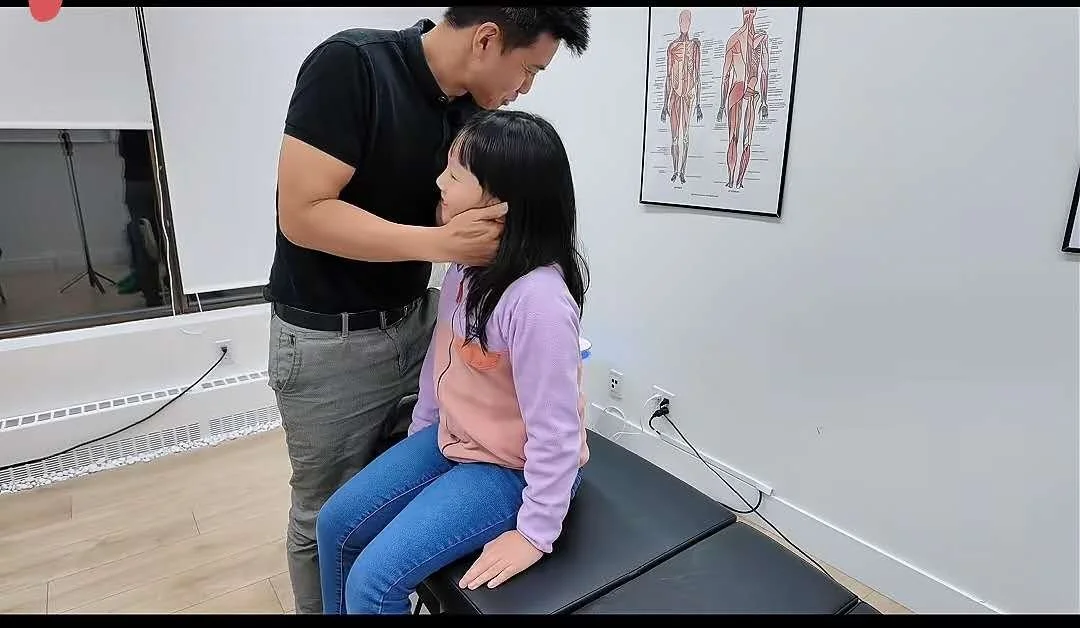
Pediatric Chiropractic Care
Gentle Chiropractic & Posture Care for Growing Bodies
Children and teenagers go through constant physical change. Growth spurts, school, sports, backpacks, prolonged sitting, phones, tablets, gaming, and repetitive activities can all place different demands on a developing musculoskeletal system.
At ProSpine Rehab & Wellness in Vancouver, pediatric chiropractic care is adapted to the child’s age, size, comfort level, and individual needs.
Our focus is on movement, posture, joint and muscle function, and musculoskeletal concerns that may affect everyday activities, school, sports, and physical development.
What Is Pediatric Chiropractic Care?
Pediatric chiropractic care involves the assessment and conservative management of musculoskeletal concerns in children and adolescents.
A pediatric appointment may include evaluation of:
Posture • Spinal movement • Joint mobility • Muscle balance • Flexibility • Movement patterns • Sports-related function
Treatment is not simply a smaller version of adult chiropractic care.
Techniques are modified according to the child’s age, body size, condition, comfort level, and clinical findings.
Common Pediatric Spinal & Musculoskeletal Concerns
Children and teenagers may experience many of the same types of muscle and joint problems as adults.
Some of the concerns we commonly assess include:
Neck Pain & Stiffness
Neck discomfort may occur after sports, prolonged screen use, studying, awkward sleeping positions, or minor injuries.
Treatment may focus on mobility, muscle tension, posture, and movement habits.
Lower Back Pain
Back pain in children and teenagers can be associated with sports, lifting, prolonged sitting, growth-related changes, or repetitive activity.
Persistent back pain in a child should be properly assessed rather than assumed to be normal.
Mid-Back & Shoulder Tension
Students who spend long periods sitting at school, studying, gaming, or using devices may develop stiffness or muscle fatigue through the upper and mid-back.
Sports-Related Injuries
Young athletes place repeated stress on their muscles and joints.
We may assess musculoskeletal complaints associated with activities such as:
Soccer • Hockey • Basketball • Dance • Gymnastics • Swimming • Golf • Martial Arts • Running
Care may include mobility work, rehabilitation exercises, soft-tissue techniques, and appropriate chiropractic treatment.
Posture Problems in Children & Teenagers
Posture is one of the most common concerns parents ask us about.
Children today spend significant amounts of time sitting at school and looking down at phones, tablets, laptops, and gaming devices.
This does not necessarily mean there is something structurally “wrong” with the spine, but prolonged positions can contribute to muscle fatigue, stiffness, discomfort, and reduced movement variety.
Common Posture Concerns
Parents may notice:
Head positioned forward
Rounded shoulders
Slouched sitting
Increased rounding of the upper back
Uneven shoulder height
Leaning consistently to one side
Difficulty maintaining an upright seated position
Neck or upper-back discomfort after screen use
Back discomfort after prolonged studying
Rather than trying to force children to maintain a single “perfect posture,” we focus on helping them move more often, improve strength and mobility, and reduce prolonged static positions.
“Tech Neck” & Screen Time
Phones and tablets have changed the way children spend time outside of school.
Looking downward for long periods may contribute to neck and upper-back fatigue.
A child with screen-related discomfort may benefit from a combination of:
Posture education • Screen-position changes • Movement breaks • Neck and upper-back mobility • Strengthening exercises
One of the simplest strategies is encouraging children to regularly change position rather than remaining bent over a device for long periods.
Backpack-Related Back & Shoulder Strain
A heavy or poorly positioned backpack can make carrying school supplies uncomfortable.
Common complaints can include shoulder fatigue, upper-back tension, or lower-back discomfort.
We may discuss practical factors such as:
Using both shoulder straps
Adjusting the straps so the backpack sits comfortably
Avoiding unnecessary weight
Distributing contents evenly
Taking the backpack off when it is not needed
If discomfort persists even after these changes, a musculoskeletal assessment may be appropriate.
Scoliosis & Spinal Asymmetry
Parents sometimes notice that one shoulder appears higher than the other, the waist looks uneven, or the spine appears curved.
These findings can sometimes be associated with scoliosis, particularly during periods of rapid growth.
Chiropractic care does not replace medical monitoring or specialist care for scoliosis, and we do not claim to straighten structural scoliosis through adjustments.
However, chiropractic and rehabilitation care may sometimes be used alongside medical management to address associated musculoskeletal concerns such as stiffness, discomfort, mobility, or exercise needs.
If we identify findings that warrant further assessment, we may recommend evaluation by your family physician or another appropriate health professional.
Postural Kyphosis & Rounded Upper Back
Some children and teenagers develop a noticeably rounded upper-back posture.
In many cases, this may be influenced by sitting habits, muscle endurance, mobility, or rapid growth.
Other conditions can also cause increased spinal curvature, so an assessment is important when the change appears significant or persistent.
Treatment may focus on:
Thoracic mobility • Shoulder mobility • Strengthening • Exercise • Postural awareness
If the presentation suggests something beyond a routine postural issue, referral for further medical assessment may be recommended.
Growth Spurts & Changing Movement Patterns
Children can grow rapidly over relatively short periods.
During a growth spurt, coordination, flexibility, and movement patterns can temporarily change.
Young athletes in particular may notice increased muscle tightness or difficulty performing movements that previously felt easy.
Our approach may include mobility work, stretching, strengthening, and movement advice appropriate for the child's activities and stage of development.
Is Chiropractic Care Safe for Children?
This is understandably one of the first questions parents ask.
Pediatric chiropractic treatment should be age-appropriate, gentle, and individualized.
At ProSpine, the amount of force and the techniques used are modified according to the child’s age, size, comfort, and clinical needs.
Care may include:
Gentle joint mobilization
Low-force chiropractic techniques
Soft-tissue treatment
Stretching
Mobility exercises
Rehabilitation exercises
Posture and movement education
We do not automatically use the same manual techniques on a child that we would use on an adult.
A parent or guardian can remain involved throughout the assessment and treatment process.
What Happens at a Pediatric Chiropractic Appointment?
1. Health & Activity History
We begin by speaking with the parent and child about the concern.
We may ask about:
Symptoms • Sports • School activities • Screen time • Previous injuries • Growth • Medical history
2. Posture & Movement Assessment
Depending on the concern, we may evaluate posture, spinal movement, flexibility, joint mobility, muscle function, and movement patterns.
3. Explanation
We explain our findings in clear language so both the parent and child understand what we found.
4. Personalized Care
If chiropractic care is appropriate, treatment is modified specifically for the child.
We may also recommend home exercises, movement breaks, posture changes, or rehabilitation.
Does Every Child Need Chiropractic Care?
No.
Children do not need chiropractic adjustments simply because they are growing.
Our approach is based on whether there is a specific musculoskeletal concern, symptom, movement limitation, sports-related issue, or other clinical reason for care.
If your child is doing well and has no concerns, chiropractic treatment is not automatically necessary.
When Should a Child See a Doctor Instead?
Certain symptoms require medical evaluation.
Seek prompt medical attention if a child has symptoms such as:
Severe or unexplained pain • Significant trauma • Fever with back pain • Progressive weakness • New numbness • Problems with walking • Changes in bowel or bladder function • Night pain that is persistent or worsening
If something during our assessment appears outside the scope of chiropractic care, we will recommend appropriate medical follow-up.
Helping Children Build Healthy Movement Habits
One of the most valuable things we can do for children is encourage healthy movement habits early.
That may include:
Regular physical activity
Taking breaks from prolonged sitting
Keeping screens closer to eye level when practical
Strengthening the back, core, and shoulders
Participating in age-appropriate sports and activities
Getting adequate sleep and recovery
Our goal is not to make children dependent on treatment.
It is to help them understand their bodies and develop habits that support movement as they grow.
Pediatric Chiropractic & Posture Care at ProSpine
If your child is experiencing back pain, neck discomfort, posture concerns, sports-related aches, or reduced mobility, we can perform an assessment and determine whether conservative care may be appropriate.
ProSpine Rehab & Wellness
Vancouver, BC
778-805-8188
info@prospinevan.ca
BOOK A PEDIATRIC ASSESSMENT